
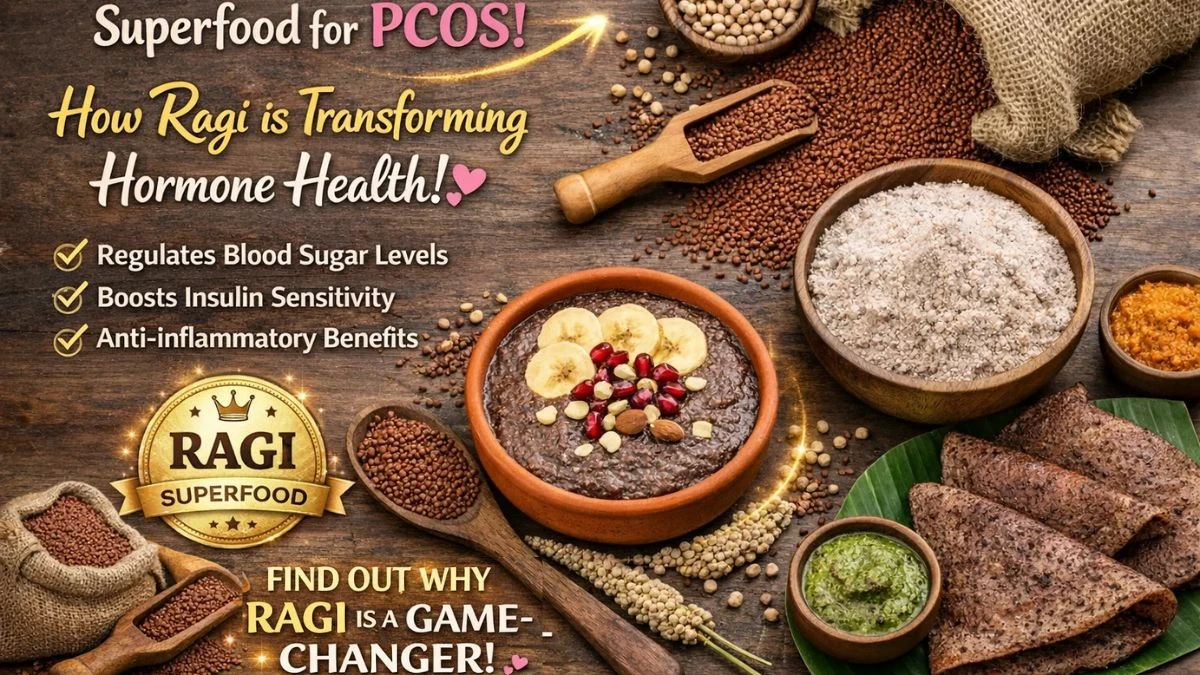
One Superfood for PCOS? How Ragi Is Changing Hormone Health! 💕
Superfood for PCOS? PCOS (Polycystic Ovary Syndrome) is not just about irregular periods. It’s about hormones, insulin resistance, weight struggles, acne, mood swings, and sometimes even fertility challenges. Many women feel overwhelmed trying medicines, supplements, and strict diets.
And then comes a simple question:
Can one traditional grain like ragi really make a difference?
Let’s talk honestly and scientifically — no hype, no miracle claims — just real facts about ragi (finger millet) and how it may support hormone health in PCOS.
🌾 What Is Ragi?
Superfood for PCOS Ragi, also known as finger millet, is an ancient whole grain widely consumed in India and Africa. It’s naturally:
- Rich in fiber
- High in calcium
- Moderate in plant protein
- Packed with iron and antioxidants
- Gluten-free
Unlike refined wheat or white rice, ragi is a low to moderate glycemic index (GI) grain, which means it releases sugar slowly into the bloodstream.
And that’s where the connection with PCOS begins.
💕 Understanding PCOS in Simple Terms
PCOS is largely linked to:
- Insulin resistance
- High androgen (male hormone) levels
- Chronic inflammation
- Weight gain or difficulty losing weight
- Irregular ovulation
About 60–70% of women with PCOS have insulin resistance — even if they are not overweight.
When insulin levels stay high:
- The body stores more fat
- Ovaries produce more androgens
- Periods become irregular
- Acne and hair fall increase
So improving insulin sensitivity is one of the biggest goals in managing PCOS.
🌾 How Ragi Works for PCOS (The Real Mechanism)
Superfood for PCOS Let’s break it down scientifically but simply.
1️⃣ Ragi Improves Insulin Sensitivity
Ragi is high in dietary fiber, especially soluble fiber.
Fiber:
- Slows down glucose absorption
- Prevents sudden blood sugar spikes
- Reduces insulin surges
When insulin levels stay stable:
- Androgen production decreases
- Ovulation improves
- Weight becomes easier to manage
This is one of the main reasons ragi can support PCOS management.
2️⃣ Ragi Supports Weight Control
Many women with PCOS struggle with stubborn weight.
Ragi:
- Keeps you full for longer
- Reduces cravings
- Prevents overeating
- Supports better metabolism
Its slow digestion helps avoid the “hunger spikes” caused by refined carbs.
3️⃣ Anti-Inflammatory Benefits
PCOS is associated with low-grade chronic inflammation.
Ragi contains:
- Polyphenols
- Antioxidants
- Phytochemicals
These compounds may help reduce oxidative stress, which plays a role in hormonal imbalance.
4️⃣ Rich in Calcium & Iron
Women with PCOS sometimes face:
- Heavy periods
- Weak bones (due to hormonal imbalance)
- Fatigue
Ragi is one of the richest plant sources of calcium and contains iron, supporting overall reproductive health.
5️⃣ Gut Health & Hormone Balance
Your gut affects your hormones more than you think.
Ragi’s fiber:
- Feeds good gut bacteria
- Improves digestion
- Reduces bloating
- Supports estrogen metabolism
Healthy gut = better hormone regulation.
⚠️ Important Truth: Ragi Alone Is NOT a Cure
Let’s be honest.
Ragi is supportive — not magical.
PCOS management requires:
- Balanced diet
- Regular exercise
- Stress management
- Good sleep
- Medical guidance when needed
Ragi works best as part of a structured lifestyle plan.
🥣 How to Take Ragi in PCOS Diet

Superfood for PCOS Here are healthy and practical ways:
🌅 1. Ragi Porridge (Best for Breakfast)
- 2 tbsp ragi flour
- Cook in water or almond milk
- Add nuts, seeds
- Avoid adding sugar
✔ Good for blood sugar stability
✔ Keeps you full till lunch
🫓 2. Ragi Roti
Replace 1 wheat roti with ragi roti.
✔ Great for lunch
✔ Better than refined flour
🥞 3. Ragi Dosa / Idli
Fermented version improves:
- Nutrient absorption
- Gut health
🍪 4. Ragi Cookies (Healthy Version)
Only if:
- No refined sugar
- No maida
- Limited quantity
🍲 5. Ragi Upma
High-fiber evening meal option.
📏 How Much Ragi Is Safe?
Superfood for PCOS Moderation matters.
Recommended:
- 1 serving per day (about 30–40g flour)
Too much can cause:
- Bloating
- Thyroid issues (if iodine deficient)
- Excess calories
Balance is key.
👩⚕️ Who Should Be Careful?
Avoid excess ragi if:
- You have kidney stones (high calcium sensitivity)
- Severe thyroid imbalance
- Digestive issues
- Gluten-free is not required and variety is better
Always consult a healthcare provider if you have complex hormonal conditions.
💬 Realistic Expectations
With consistent use (8–12 weeks) alongside lifestyle changes, some women may notice:
- Better cycle regularity
- Reduced cravings
- Mild weight improvement
- Better energy levels
- Improved blood sugar reports
But results vary.
🧠 Why Ragi Feels “Transformative” for Some Women
Superfood for PCOS Because many PCOS diets eliminate:
- Refined flour
- Sugary foods
- Processed carbs
And replacing them with a whole grain like ragi makes a noticeable metabolic difference.
It’s not magic.
It’s metabolic science.
🏁 Conclusion
So, is ragi a superfood for PCOS?
Yes — in the right context.
It supports:
✔ Insulin control
✔ Weight balance
✔ Hormone stability
✔ Gut health
✔ Inflammation reduction
But remember:
Ragi is a helper, not a healer.
PCOS needs a holistic approach.
Small changes, done consistently, create big hormonal shifts.
Also Read: Ayurvedic Superfoods for Daily Health
❓ 10 Frequently Asked Questions (FAQs)
1. Can Superfood for PCOS completely?
No. It supports management but does not cure PCOS.
2. Is ragi good for insulin resistance?
Yes, due to its fiber and slow glucose release.
3. Can I eat ragi daily?
Yes, in moderation (1 serving per day).
4. Is ragi better than wheat Superfood for PCOS?
Often yes, because it has a lower glycemic impact.
5. Can ragi help with weight loss in PCOS?
It may help control appetite and cravings.
6. Does ragi balance hormones?
Indirectly, by improving insulin sensitivity.
7. Is ragi safe during fertility treatment?
Generally yes, but consult your doctor.
8. Can ragi worsen thyroid?
Excess consumption may interfere if iodine intake is low.
9. Is ragi gluten-free?
Yes.
10. How long before I see results?
Usually 2–3 months with lifestyle changes.

I’m a professional Ayurvedic food and wellness content publisher, sharing evidence-based insights on Ayurvedic nutrition, natural remedies, healthy recipes, lifestyle tips, and holistic wellness trends from around the world.